
When startups move to the cloud, choosing the right Cloud Services can significantly reduce infrastructure costs.
But there’s one problem many startups don’t realize until the end of the month…
The cloud bill keeps growing.
It starts with a single server. Then you add a database, a load balancer, storage, backups, monitoring, and suddenly your monthly cloud bill is much higher than expected.
The surprising part?
In most cases, startups aren’t paying for what they need; they’re paying for what they forgot to clean up or optimize.
Let’s look at a few cloud cost optimization best practices that help startups reduce cloud costs without compromising performance.
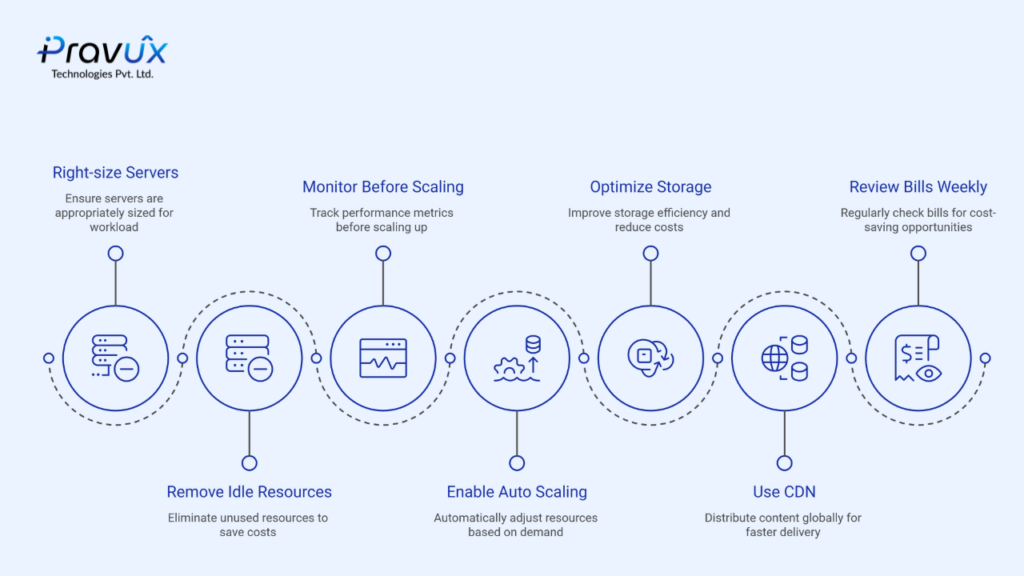
1. Don’t Oversize Your Servers
A common mistake is choosing large instances “just to be safe.”
For example, if your application only uses 20% CPU and 30% memory, there’s no reason to run a high-end server 24/7.
- One of the most effective cloud cost optimization strategies is choosing the right instance size and scaling only when required.
Remember: Bigger servers don’t always mean better performance.
2. Stop Paying for Idle Resources
During development and testing, teams often create temporary resources and forget about them.
Some common examples include:
- Unused EC2 instances
- Old virtual machines
- Detached storage volumes
- Unused snapshots
- Idle load balancers
- Test databases that are no longer needed
These resources continue generating costs even when nobody is using them.
A quick monthly cleanup can save a surprising amount.
3. Monitor Before You Scale
Many teams solve performance issues by simply increasing server size.
But before upgrading infrastructure, ask:
- Is the CPU overloaded?
- Is memory usage consistently high?
- Is the database a real bottleneck?
Use cloud cost monitoring and performance monitoring tools to identify bottlenecks before increasing infrastructure costs.
Sometimes optimization is cheaper than upgrading.
4. Enable Auto Scaling
Traffic isn’t constant.
Your application may receive high traffic during business hours and very little at night.
Instead of running multiple servers all day, use Auto Scaling for cloud cost optimization to match infrastructure with real-time demand.
This helps maintain performance while reducing unnecessary costs.
5. Choose the Right Storage
Not every file needs expensive, high-performance storage.
For example:
- Frequently accessed files → Fast storage
- Old backups and archives → Low-cost storage
Choosing the right storage class is one of the easiest ways to optimize cloud infrastructure costs.
6. Use a CDN for Static Content
If your application serves images, videos, CSS, or JavaScript files directly from your server, you’re using valuable server resources unnecessarily.
A Content Delivery Network (CDN) can:
- Deliver content faster
- Reduce server load
- Lower bandwidth costs
- Improve user experience
It’s a simple change with long-term benefits.
7. Review Your Cloud Bill Regularly
Many startups only look at cloud costs when they receive the monthly invoice.
Instead, review your usage every week.
Small issues are much easier to fix before they become expensive habits.
Cloud Optimization Is an Ongoing Process
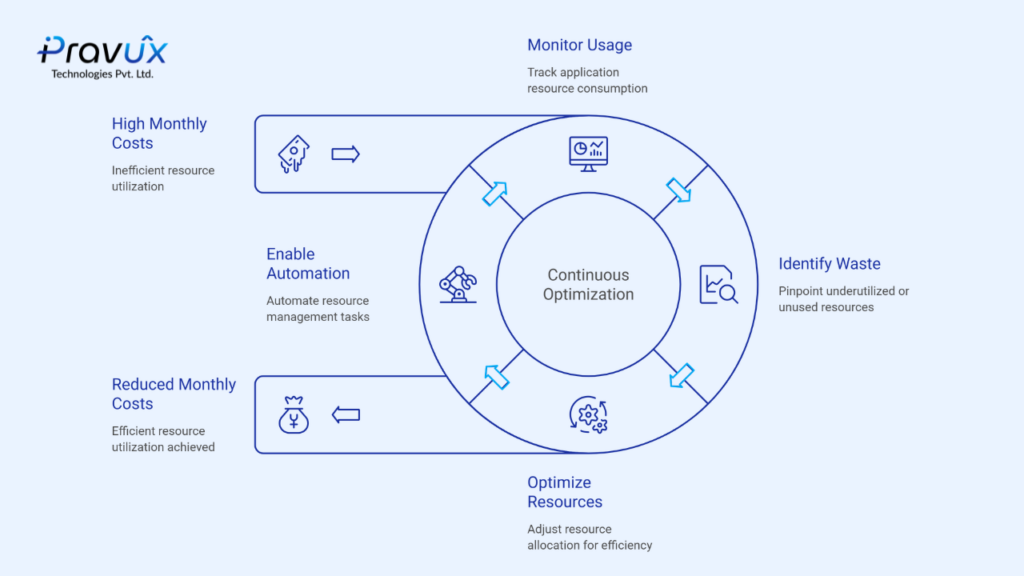
Cloud cost optimization isn’t about cutting every expense.
It’s about making smart decisions.
Sometimes spending a little more improves reliability.
Sometimes reducing unused resources saves thousands over a year.
The goal isn’t to have the lowest cloud bill.
The goal is to make sure every dollar spent delivers value to your business.
Final Thoughts
Cloud platforms give startups incredible flexibility, but flexibility also comes with responsibility.
Simple practices like:
- Choosing the right server size
- Cleaning up unused resources
- Monitoring infrastructure
- Using Auto Scaling
- Optimizing storage
can make a huge difference over time.
Cloud cost optimization for startups isn’t a one-time task. It’s an ongoing process that helps businesses reduce cloud costs, improve performance, and build a scalable cloud infrastructure.
It’s something every growing startup should make part of its regular operations.
About Us
At Pravux Technologies Pvt. Ltd., we help startups and businesses build secure, scalable, and cost-efficient cloud infrastructure. From cloud architecture and DevOps automation to performance optimization and cost management, we help teams get the most value from their cloud investments.
Build smarter. Scale faster. Spend wisely.