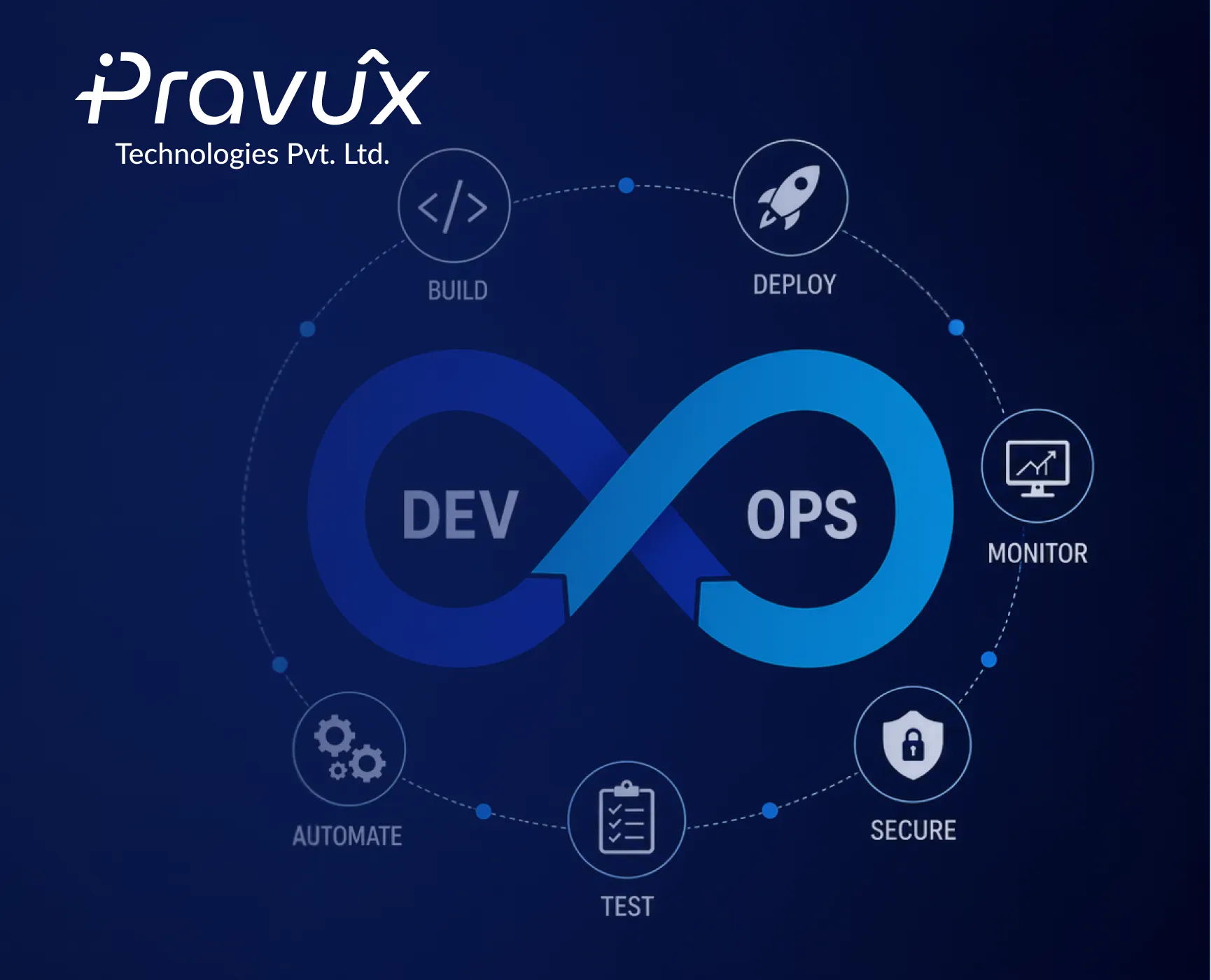
DevOps has changed a lot over the past few years.
Earlier, the focus was mainly on automating deployments. Today, it’s much bigger than that. Modern DevOps is about building applications that are secure, reliable, scalable, and easy to maintain.
With AI, cloud-native technologies, and increasing cybersecurity threats, the way we build and manage infrastructure has also evolved.
If you’re starting a new project or improving an existing one, here are some DevOps best practices and migration strategy tips that every team should follow in 2026.
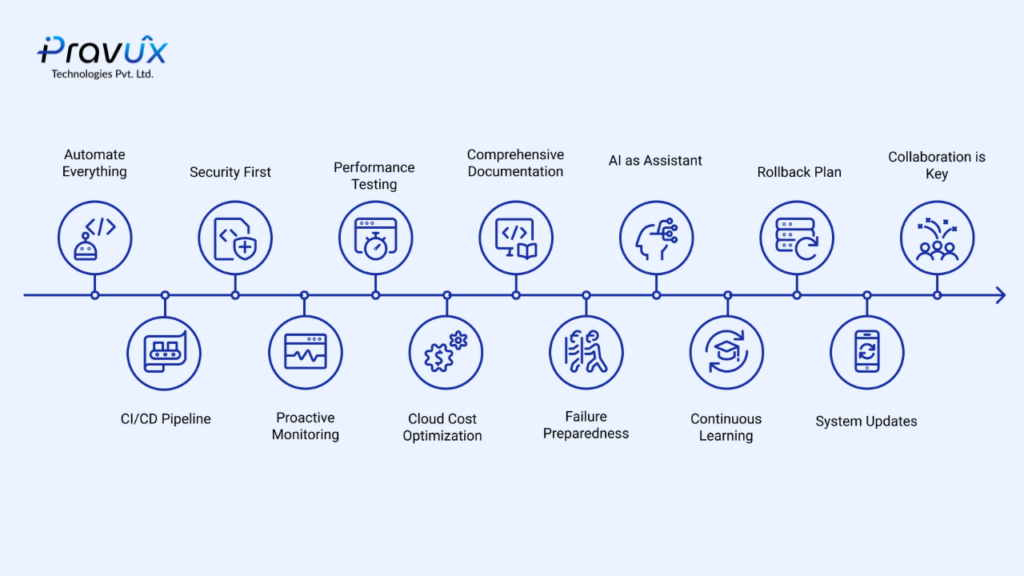
1. Automate Everything You Can
Manual work slows teams down and increases the chances of mistakes.
Whether it’s deployments, backups, infrastructure provisioning, or monitoring, automation should be part of your daily workflow.
The goal isn’t just to save time, it’s to make every process consistent and repeatable.
2. Build a Proper CI/CD Pipeline
Deploying code directly to production is still one of the biggest mistakes teams make.
A good CI/CD pipeline should include:
- Code validation
- Automated testing
- Security scanning
- Deployment to Development
- Staging approval
- Production deployment
The more confidence you have in your pipeline, the faster and safer your releases become.
3. Security Should Be Built into Every Stage
Security is no longer something you check before production.
It should be part of the entire development lifecycle.
Simple practices like:
- Restricting SSH access
- Closing unused ports
- Using least privilege permissions
- Managing secrets securely
can prevent serious security incidents later.
4. Monitor Before Problems Become Outages
Many teams only investigate after users report an issue.
Instead, monitor your infrastructure continuously.
Track things like:
- CPU usage
- Memory consumption
- Disk usage
- Application response time
- Error rates
- Service availability
Good monitoring helps you solve problems before customers notice them.
5. Test Performance Before Production
An application that works for 10 users may fail with 1,000.
Performance testing should never be skipped.
Use tools like JMeter to understand how your application behaves underload and identify bottlenecks before they affect real users.
6. Optimize Cloud Costs Regularly:
Cloud platforms make scaling easy, but they can also become expensive if left unmanaged.
Review your infrastructure regularly.
Remove unused resources, right-size servers, use Auto Scaling where appropriate, and monitor cloud spending.
Cost optimization isn’t about spending less.
It’s about spending wisely.
7. Document Everything
Good documentation saves hours of troubleshooting.
Maintain clear documentation for:
- Deployment process
- Server architecture
- Backup strategy
- Recovery procedures
- Access policies
When everyone follows the same process, operations become much smoother.
8. Prepare for Failure
No infrastructure is perfect.
Servers fail.
Applications crash.
Networks go down.
The important question isn’t if something will fail.
It’s how quickly your team can recover.
Always have:
- Regular backups
- Rollback plans
- Disaster recovery procedures
- Monitoring and alerting
Preparation makes recovery much easier.
9. Use AI as an Assistant, not a Replacement
ai in software development is becoming a major part of modern DevOps.
It can help with:
- Log analysis
- Incident investigation
- Documentation
- Automation suggestions
But experience and engineering decisions still belong to people.
The best teams combine AI with human expertise, not replacing one with the other.
10. Keep Learning
Technology changes quickly.
New tools appear every year.
Instead of trying every new trend, focus on understanding the fundamentals.
Strong Linux skills, networking knowledge, cloud concepts, scripting, security, and troubleshooting will always be valuable.
Tools may change.
Good engineering doesn’t.
11. Always Have a Rollback Plan
Every deployment feels successful until something unexpected happens.
Maybe a new feature causes high CPU usage.
Maybe an API starts failing.
Maybe users suddenly can’t log in.
The question isn’t whether deployments can fail, they sometimes do.
The important part is how quickly you can recover.
Before every production release, ask yourself:
“If something goes wrong, how fast can we roll back?”
A good rollback strategy can turn a major outage into a minor incident.
12. Keep Your Systems Updated
Many security incidents don’t happen because hackers discover something new.
Updating operating systems, packages, Docker images, and application dependencies may not be exciting work, but it’s one of the easiest ways to improve security.
Small updates performed regularly are much easier than dealing with a compromised production server.
13. Collaboration Is Still the Best DevOps Tool
People often think DevOps is all about automation and tools.
Communication is just as important.
Developers, QA engineers, system administrators, and DevOps engineers should all work together instead of operating in separate silos.
When everyone shares responsibility for building, deploying, and maintaining applications, problems get solved much faster.
The best DevOps culture isn’t built around tools.
It’s built around teamwork.
Final Thoughts
DevOps in 2026 isn’t about using most tools.
It’s about building systems that are:
- Secure
- Reliable
- Automated
- Cost-efficient
- Easy to scale
The best DevOps teams don’t just deploy applications faster.
They build infrastructure that businesses can trust.
Technology will continue to evolve, but these principles will remain the foundation of successful DevOps practices.
About Us
At Pravux Technologies Pvt. Ltd., we help businesses build secure, scalable, and production-ready infrastructure through our DevOps consulting services, cloud automation, monitoring, performance optimization, and modern deployment practices.
Build smarter. Deploy faster. Operate with confidence.